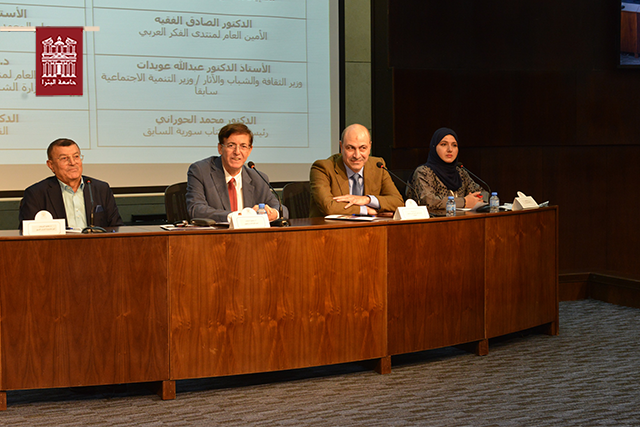
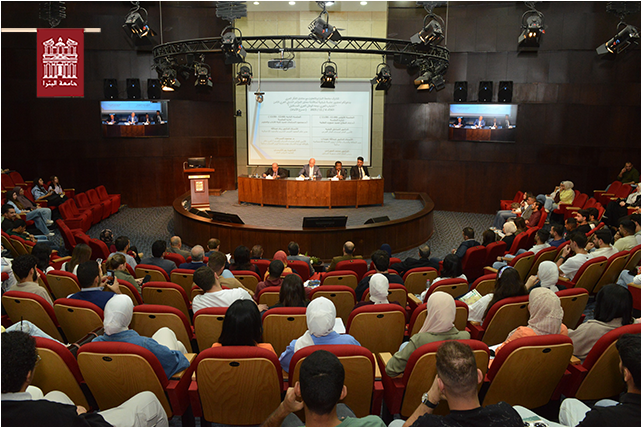
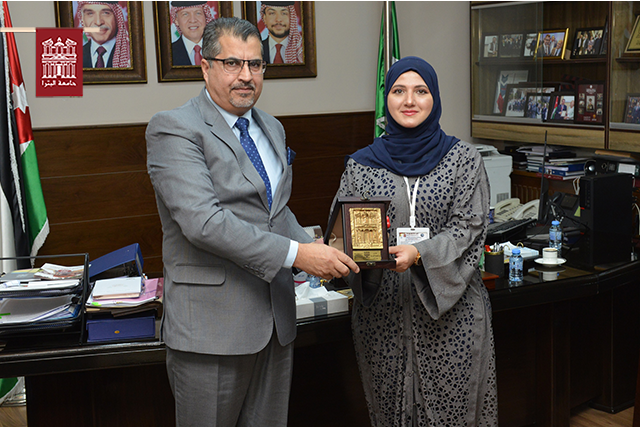
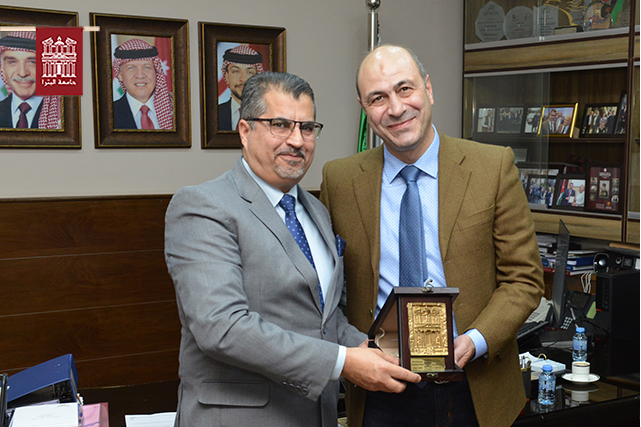
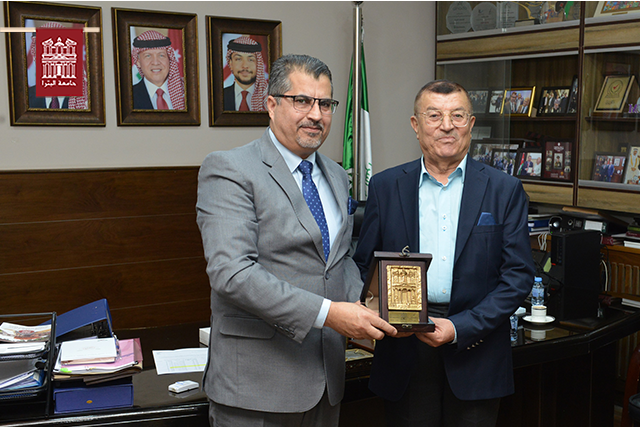
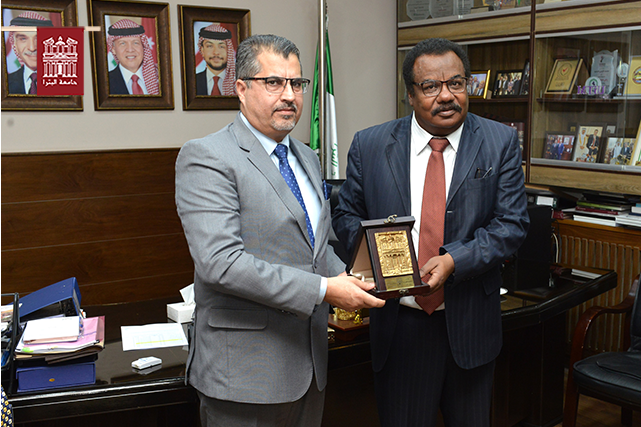
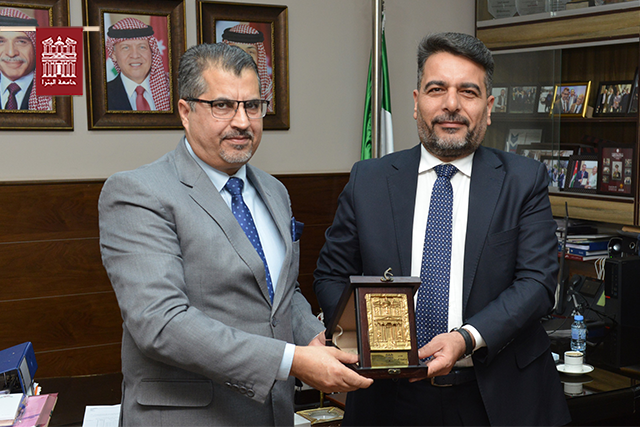
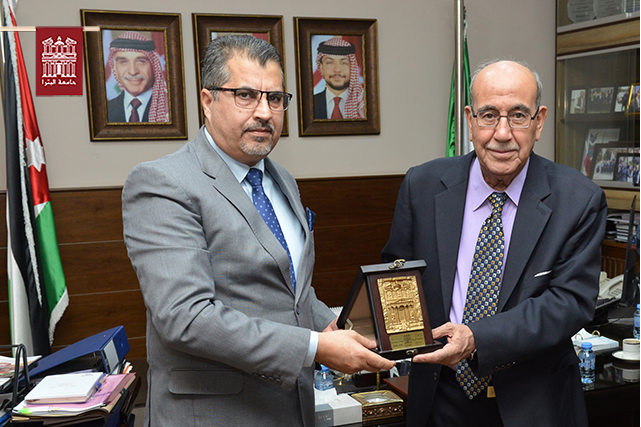
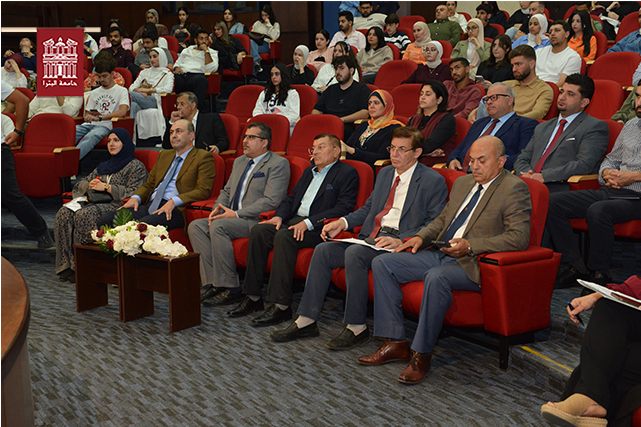
As part of the preparations for the 8th Arab Youth Conference scheduled for early 2026, the Arab Thought Forum, in cooperation with University of Petra, organized a youth session titled “Arab Youth: The Future Face of the Arab World." The event was held at the university's Anbat Theatre, in the presence of University President Prof. Rami Abdel-Rahem, a number of deans and faculty and administrative members, and a large audience of students.
The session came within the framework of the Forum's ongoing partnership with universities and youth institutions, aiming to engage young people in expressing their ideas and sharing their perspectives ahead of the conference. The meeting, which included two discussion panels, addressed major issues concerning Arab youth and their role in shaping the future.
The first session, moderated by Prof. Eyad Al-Mallah, Dean of Student Affairs at the University of Petra, began with a speech by Dr. Al-Sadiq Al-Faqih, Secretary-General of the Arab Thought Forum. He highlighted the central role of youth in achieving Arab renaissance, noting that since its establishment in 1981 by HRH Prince El Hassan bin Talal, the Forum has given special attention to youth and their role in renewing Arab thought and building the nation's future.
Dr. Al-Faqih also emphasized the Forum's deep partnership with Jordanian universities—particularly University of Petra—as an outstanding academic environment that fosters dialogue and intellectual growth. He stressed that intellectual progress can only be achieved through youth awareness and belief in their role in shaping tomorrow.
H.E. Prof. Abdullah Owaidat, former Minister of Culture, Youth, and Antiquities (and former Minister of Social Development), underscored the importance of intergenerational dialogue to better understand the challenges and aspirations of young people. He explained that true citizenship is founded on justice and merit, not lineage or affiliation, urging youth to engage consciously in nation-building.
Dr. Mohammad Al-Hourani, former President of the Arab Writers Union in Syria, spoke about empowering youth in decision-making positions, emphasizing that true democracy is built on the participation of younger generations in shaping the future. He called for investing in their creative potential through media and social platforms to enhance sustainable development and strengthen national identity based on diversity.
The second session, moderated by Prof. Mahmoud Elsalman, Dean of the Faculty of Arts and Sciences at the University of Petra, covered a variety of topics related to development, artificial intelligence, and drug prevention.
Dr. Mahmoud Al-Sarhan, Secretary-General of the Arab Youth Forum, delivered a lecture on the importance of empowering Arab youth as the true wealth of the nation, calling for realistic policies that address their needs and enhance their communication and dialogue skills. He stressed that youth empowerment is an investment in the future.
Dr. Noor Al-Kubaissi, a specialist in international law from Iraq, presented a paper titled “Drug Prevention and Its Role in Protecting Youth." She warned against the growing threat of drugs among young people and called for the adoption of modern strategies that employ artificial intelligence in prevention, early detection, and treatment.
The session concluded with remarks by Prof. Ziad Abdullah, Director-General of the Arab Institute for Training and Research in Financial and Economic Sciences in Lebanon, who emphasized that artificial intelligence represents a valuable opportunity for Arab youth to participate actively in building the digital economy. He also highlighted the importance of linking academic education with practical training to prepare youth for the demands of the future labor market.
At the end of the event, an interactive discussion took place between the speakers and university students, during which participants shared their views and suggestions on ways to enhance the role of Arab youth in development and decision-making.